
Our Services
Quick Service Request
Inspection Request
Thank you for contacting Tick of Approval Pty Ltd.
We will get back to you as soon as possible.
Oops, there was an error sending your message.
Please try again later.
Residential Certification
Home projects need the right approvals before work moves ahead. Get support with residential certification, permit requirements, inspections and occupancy steps to help keep your build on track.
Commercial Certification
Business builds come with detailed compliance requirements. Receive clear certification guidance for commercial projects, including permits, inspections and occupancy requirements for new works, upgrades or development plans.
Compliance Assessments
Every project should meet the right codes and standards. Access support with compliance reports, energy assessments, development applications and planning scheme checks before important decisions are made.
Building Approval Process
A clear building approval process makes approvals easier to understand. Follow practical steps through documentation, permit requirements, inspections and occupancy matters so your project can progress with fewer surprises.
Building Certification Services
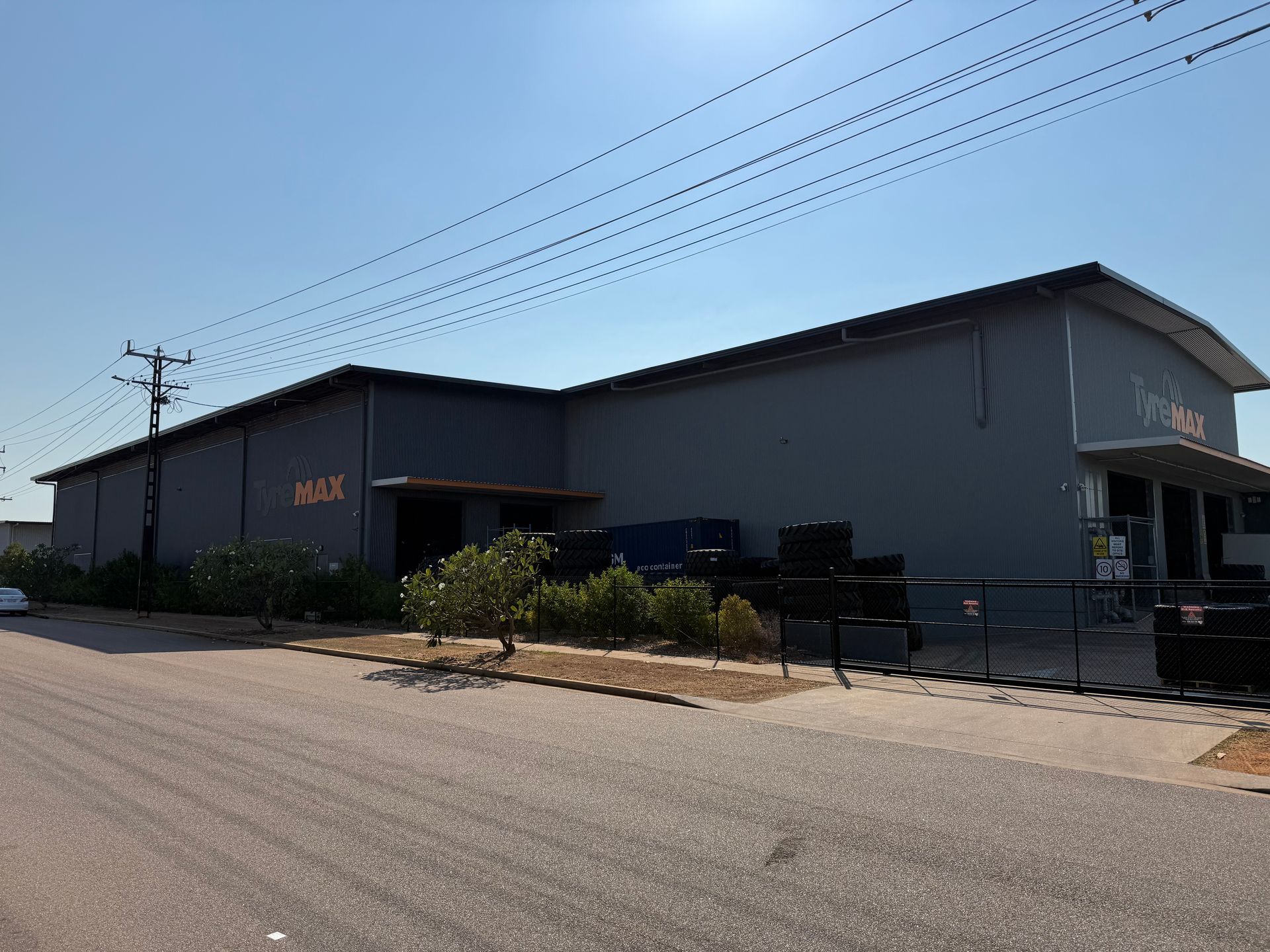
Tick of Approval Pty Ltd provides practical building certification services from Berrimah, supporting homeowners, builders, developers and commercial clients across the Northern Territory.
The team can help with residential and commercial certification, building approvals, occupancy certification, inspection certificates, compliance assessments, energy assessments, development applications and planning scheme assessments.
If you need clear guidance before, during or after a project, friendly support is available from start to finish with confidence and care. Call (08) 8947 2465 to discuss your next approval.
Common Building Definitions
| Definitions | Full Form |
|---|---|
| Building Permit | A building permit is issued by a building certifier before construction begins to show that they have approved your proposed building work. The building certifier checks that your plans comply with the law. |
| Occupancy Certification | An Occupancy Certification is the highest level of Occupancy Certification and may be issued if works fully comply with the requirements of the Building Permit, the Act and Regulations and the relevant technical standards at the time of the Building Permit. This level of Occupancy Certification may be granted by a building certifier for any class of building. An Occupancy Certification can be granted by a building certifier against an expired Building Permit, but only for works carried out during the validity of the Building Permit. |
| Certificate of Substantial Compliance | A Certificate of Substantial Compliance may be granted by a building certifier where building works occur under a valid Building Permit and meet the technical standards (specifically, the standards and codes that applied at the time the Building Permit was granted), but with minor departures from the legislated construction and certification processes. This level of certificate may be granted by a building certifier for any class of building. Minor departures might include works not constructed precisely in accordance with approved plans, missing required inspections or missing documentation e.g. a glazing certificate, plumbing certificate, etc. This category of certification cannot be granted where there is any non-compliance with the relevant technical standards. A Certificate of Substantial Compliance can be granted by a building certifier against an expired Building Permit, but only for works carried out during the validity of the Building Permit |
| Certificate of Existence | A Certificate of Existence may be granted by the Director of Building Control, on recommendation by a building certifier for building works that were completed before 1 May 2016, when certain conditions are met and any of the following circumstances apply:
A Certificate of Existence cannot be granted for:
|
| Northern Territory Building Act | An Act to provide for the establishing of technical standards for buildings, the registration of building practitioners and certifiers, the regulation of building matters, the granting of building permits and occupancy certification and the establishing of a building appeal process, and for related purposes. |
| Northern Territory Building Regulations | Includes a code or other document adopted by the Regulations for the purposes of the Building Act. |
| Building work | Means work for or in connection with the construction, demolition or removal of;
|
| Northern Territory Planning Scheme 2020 | The Northern Territory Planning Scheme (NTPS) 2020 is the 'rule book' for land use and development in the NT. The scheme covers the whole of the NT, except for Jabiru, which has the Jabiru Town Plan. The Planning Scheme applies to the whole of the Northern Territory with the exception of an area subject of a specific planning scheme made under section 8 of the Planning Act 1999. 1. The purpose of the Planning Scheme is to: (a) further the Objectives of the Planning Act 1999; (b) establish the strategic planning framework to inform and guide all development in the Territory; (c) establish controls to guide development; and (d) provide a clear framework for the assessment and determination of development applications. |
| National Construction Code | The NCC is Australia’s primary set of technical design and construction provisions for buildings. As a performance-based code, it sets the minimum required level for the safety, health, amenity, accessibility and sustainability of certain buildings. It primarily applies to the design and construction of new buildings, and plumbing and drainage systems in new and existing buildings. In some cases it may also apply to structures associated with buildings and new building work or new plumbing and drainage work in existing buildings. |
| Building Advisory Services unit | Building Advisory Services (BAS) manages rules and regulations around buildings, plumbing, and swimming pool safety. They also:
|
| Building Advisory Committee | The Building Advisory Committee is a statutory body established by the Building Act. Its major role is to maintain industry input into the Building Control Process in the Northern Territory Building Control Process, by
|
| Building Practitioners Board | The Building Practitioners Board is a statutory body established by the Building Act 1993 and is responsible for:
|
| Building Contractor Residential (Restricted) | A Building Contractor Residential (Restricted) is required for the construction of:
And the value of the work is $25,000 or above. |
| Building Contractor Residential (Unrestricted) | A Building Contractor Residential (Unrestricted) is required for the construction of
And the value of the work is $25,000 or above. |
| Building Contractor Commercial (Restricted) | A Building Contractor Commercial (Restricted) is required for the construction of:
|
| Building Contractor Commercial (Unrestricted) | A Building Contractor Commercial (Unrestricted) is required for the construction of:
|
| Building Certifier (Residential) | A Building Certifier (Residential) may issue building permits and occupancy certification for class 1 and 10 buildings or structures, in accordance with the requirements of the NT Building Act 1993, Building Regulations and provisions of the Building Code of Australia. |
| Building Certifier (Unrestricted) | A Building Certifier (Unrestricted) may issue building permits and occupancy certificates for all classes of buildings or structures, in accordance with the requirements of the NT Building Act 1993, Building Regulations and provisions of the Building Code of Australia. |
| Certifying Engineer (Structural) | A Structural Engineer may certify the design and/or construction of all classes of buildings or structures and component elements, in accordance with the structural provisions of the Building Code of Australia. Engineers registered in this category can apply for endorsement as an independent review engineer as defined in the Building Regulations 1993. |
| Certifying Plumber and Drainer | A Certifying Plumber and Drainer may certify the design and/or construction of plumbing and drainage works in all classes of buildings, in accordance with the provisions of Building Regulations (4) (AS/NZS:3500); certify the construction of hydraulic fire services i.e. fire hydrants and fire hose reels, in accordance with the approved design and (AS/NZS:3500). |
| Home Building Certification Fund – Territory Insurance Office | The Home Building Certification Fund (HBCF) is an indemnity fund that covers the rectification of building works that are non-compliant with the National Construction Code. The period of cover under a HBCF policy is 10 years from the date of the issue of an Occupancy Certification. HBCF policies were first issued with the commencement of private sector certification in 1993 and ceased to be issued on 1 January 2013, with the commencement of Residential Building Cover and the Fidelity Fund. Many policies issued over this time have not been activated as an Occupancy Certificate has not been issued (even though works may have been completed within the validity period of the Building Permit). The Building Amendment (Occupancy Certification) Act 2016 makes it clear that the 10-year period of cover commences from the date the building certifier determines building works to have been completed, or no later than two years from the date the Building Permit was granted. |
| Residential Building Cover (Fidelity Certificate– Master Builders Assoc.) | In the Northern Territory (NT), owners of new homes must have residential building cover as protection from defective or incomplete work. New homes in this instance include duplexes, units in complexes up to three storeys in height excluding undercroft or underground parking levels, and extensions or renovations to those buildings. The Building Act sets out the requirements for residential building insurance. Contact the Master Builders Fidelity Fund to get a fidelity fund certificate. The Master Builders Fidelity Fund is currently the only provider in the NT and manages the fidelity fund. A Certificate of Substantial Compliance will be eligible for cover under the Fidelity Fund in the same way works covered by an Occupancy Certificate receive cover. Building work that is granted a Certificate of Existence will not be able to access Fidelity Fund cover. |
| Wastewater management system | A wastewater management system (WMS) is a physical collection of pipes and chambers that receives, treats, and applies domestic wastewater to a land application system or a holding tank. A WMS may comprise an on-site wastewater management system (OWMS) or a community wastewater management system (CWMS). |
| Deemed to Comply Manual | The NT Deemed to Comply Manual (DTCM) is referenced in the Building Code of Australia, Volume 2, Part 3.10.1 as an acceptable construction manual for high wind areas. The Manual contains products or systems which have been assessed for structural adequacy for cyclonic wind loads and approved by the NT Building Advisory Committee (BAC). These drawings can be accepted by architects, builders, building certifiers, designers, engineers etc as complying with the structural requirements of the NT Building Act. Manufacturers' specifications must be consulted for any non-structural issues such as waterproofing, safety etc. |
| Occupancy Certification Guidelines | The Guidelines provide guidance to building certifiers, other building practitioners, owners and owners’ agents about the three different levels of Occupancy Certification in the Northern Territory Building Certification System. The focus of the Guidelines is in relation to the assessment of Certificates of Substantial Compliance and Certificates of Existence, as these categories of Occupancy Certification were introduced on 1 May 2016. Legislative AuthorityThe Director of Building Control (DBC) under section 167B of the Building Act makes these Guidelines. Section 167B enables Guidelines to be issued to assist in the administration and compliance with the Building Act. A person acting under the Building Act must have regard to these Guidelines, which means that strict compliance is not required, except where reference is made to law. |
| Prescribed certification documents | These are set out by law (Building Act and Regulations) and include the following:
The prescribed certification documentation you need will depend on the type of building work you are doing. |
| Building Code of Australia – Classification summary of buildings and structures | Class 1Class 1 buildings are houses. Typically, they are standalone single dwellings of a domestic or residential nature. These buildings can also be horizontally attached to other Class 1 buildings. When attached they are commonly referred to as duplexes, terrace houses, row houses and town houses. In these situations, they must be separated by a wall with fire-resisting and sound insulation properties. The Class 1 classification includes 2 sub-classifications: Class 1a and Class 1b. Class 1a building is a single dwelling being a detached house; or one of a group of attached dwellings being a town house, row house or the like. Class 1b building is a boarding house, guest house or hostel that has a floor area less than 300 m2 and ordinarily has less than 12 people living in it. It can also be 4 or more single dwellings located on one allotment which are used for short-term holiday accommodation. Class 2Class 2 buildings are apartment buildings. They are typically multi-unit residential buildings where people live above and below each other. The NCC describes the space considered as an apartment as a sole-occupancy unit (SOU). Class 2 buildings may also be single storey attached dwellings with a common space below. For example, 2 dwellings above a common basement or carpark. Class 3Class 3 applies to residential buildings other than Class 1 or Class 2 buildings, or a Class 4 part of a building. Class 3 buildings are a common place of long term or transient living for a number of unrelated people. Examples include a boarding house, guest house, hostel or backpackers (that are larger than the limits for a Class 1b building). Class 3 buildings could also include dormitory style accommodation, or workers’ quarters for shearers or fruit pickers. Class 3 buildings may also be ‘care-type’ facilities such as accommodation buildings for children, the elderly, or people with disability, which are not Class 9 buildings. Class 4A Class 4 part of a building is a sole dwelling or residence within a building of a non-residential nature. An example of a Class 4 part of a building would be a caretaker’s residence in a storage facility. A Class 4 part can only be located in a Class 5 to 9 building. Class 5Class 5 buildings are office buildings used for professional or commercial purposes. Examples of Class 5 buildings are offices for lawyers, accountants, government agencies and architects. Class 6Class 6 buildings are typically shops, restaurants and cafés. They are a place for the sale of retail goods or the supply of services direct to the public. Some examples are:
Class 7Class 7 buildings are storage-type buildings. The Class 7 classification has 2 sub-classifications: Class 7a and Class 7b. Class 7a buildings are carparks. Class 7b buildings are typically warehouses, storage buildings or buildings for the display of goods (or produce) for wholesale Class 8A factory is the most common way to describe a Class 8 building. It’s a building in which a process (or handicraft) is carried out for trade, sale, or gain. The building can be used for production, assembling, altering, repairing, finishing, packing, or cleaning of goods or produce. It includes buildings such as a mechanic’s workshop. It may also be a building for food processing, such as an abattoir. Class 9Class 9 buildings are buildings of a public nature. The Class 9 classification has three sub-classifications: Class 9a, Class 9b and Class 9c. Class 9a buildings are generally hospitals, referred to as health-care buildings in the NCC. They are buildings in which occupants or patients undergo medical treatment and may need physical assistance to evacuate in the case of an emergency. This includes a clinic (or day surgery) where the effects of the treatment administered involve patients becoming unconscious or unable to move. This in turn requires supervised medical care (on the premises) for some time after treatment has been administered. Class 9b buildings are assembly buildings in which people may gather for social, theatrical, political, religious or civil purposes. They include schools, universities, childcare centres, pre-schools, sporting facilities, night clubs, or public transport buildings. Class 9c buildings are residential care buildings that may contain residents who have various care level needs. They are a place of residence where 10% or more of persons who reside there need physical assistance in conducting their daily activities and to evacuate the building during an emergency. An aged care building, where residents are provided with personal care services, is a Class 9c building. Class 10Class 10 buildings are non-habitable buildings or structures. Class 10 includes three sub-classifications: Class 10a, Class 10b and Class 10c. Class 10a buildings are non-habitable buildings including sheds, carports, and private garages. Class 10b is a structure being a fence, mast, antenna, retaining wall, swimming pool, or the like. A Class 10c building is a private bushfire shelter. A private bushfire shelter is a structure associated with, but not attached to, a Class 1a building. |